The secret to selecting handcrafted wood for a curated interior is not knowing wood species or joinery techniques—it is learning to read a piece's observable features and asking where they belong. A rectilinear table with exposed joinery speaks one design language; a live-edge slab speaks another. This guide distills the principles of the American Arts & Crafts movement and the Studio Craft tradition into a practical framework for matching artisanal woodwork to modern, rustic, and Arts & Crafts interiors.
The Enduring Appeal of Artisanal Woodcraft in Home Decor
What draws decorators to handcrafted wood is authenticity. Writing on artisanal interior design, Cortney Gillett describes spaces filled with "imperfect finishes, tactile textures, and one-of-a-kind pieces," where "nothing is off the shelf or ordinary." Artisanal interiors, in her framing, favor uniqueness, celebrate imperfection, and thrive on the emotional connection between maker and homeowner.
That emotional register is what separates a handcrafted piece from mass-produced furniture. A wooden object that bears the marks of its making develops character as it is touched and lived with—Gillett notes that such material "develops character as it's touched and loved," making it a fit for homes that value texture, age, and authenticity. The practical question for a decorator is not whether artisanal wood is appealing, but which piece suits which room.
Arts & Crafts Movement: Honesty in Wood
The American Arts & Crafts movement gives decorators the clearest vocabulary for evaluating handcrafted wood. A style guide from Old California, a company specializing in Craftsman-era homes, identifies the movement's signature elements: natural woodwork, typically quarter-sawn white oak with visible grain patterns; warm, earthy palettes drawn from nature; and hammered copper, bronze, and wrought iron hardware that deliberately retains "evidence of imperfections to show their handcrafted nature."
The furniture itself is defined by restraint: rectilinear forms with visible joinery and minimal ornamentation, comfortable and functional designs emphasizing clean lines and honest construction. The guide distills the philosophy into three principles worth memorizing—these spaces "celebrate honest materials, visible craftsmanship, and a connection to nature." Those principles remain the best test of whether a contemporary artisanal piece is genuinely in the Arts & Crafts spirit or merely imitating its surface.
Identifying Key Characteristics of Handcrafted Wood
When you stand in front of a handcrafted piece, four observable features tell you most of what you need to know. First, look for visible craftsmanship: exposed joinery and hand-worked elements that highlight the maker's skill and the integrity of the construction. Second, examine the finish—artisanal work favors honest, natural materials and finishes that let the wood's inherent beauty be central rather than buried under heavy coatings.
Third, notice texture. Hand-worked surfaces, visible grain, and the small irregularities of the maker's hand are features, not flaws; they connect the piece to nature and to the person who made it. Fourth, consider how the piece ages. Unlike factory furniture, artisanal wood is often valued precisely because it develops character over time. A decorator who can name these four features—joinery, finish, texture, and patina—can evaluate almost any piece on the spot.
From Rectilinear to Organic: Forms in Artisanal Wood
Form is where artisanal woodwork divides into two distinct traditions. The Arts & Crafts lineage is rectilinear: functional, clean-lined, and straightforward in construction. The other lineage is sculptural. The Studio Craft Movement, chronicled by furniture retailer Tom Faulkner's writer Annabel Colterjohn, centers on Wharton Esherick, whose legacy lies in "pushing the boundaries of a traditional material to reveal a delightfully modern aesthetic."
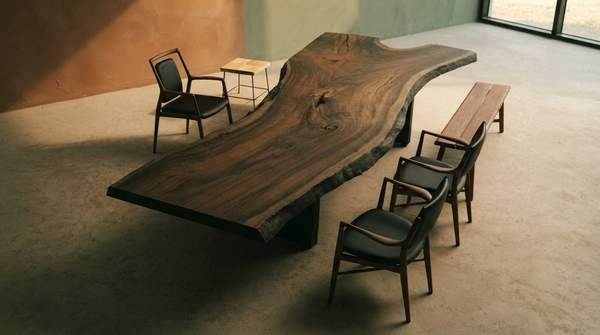
Writing in Art & Antiques Magazine, Sheila Gibson Stoodley traces the tradition onward: George Nakashima "transformed rugged, almost raw-looking slabs of wood into magnificent coffee tables and benches," while Sam Maloof "raised rocking chairs to an art form." These pieces highlight the unique characteristics of the wood itself and are conceived as one-of-a-kind creations. Notably, dealer David Rago observes that Nakashima's furnishings "harmonize with virtually every interior design style imaginable"—a reminder that organic forms, though bold, can be surprisingly versatile.
Integrating Artisanal Wood into Your Interior Style
Artisanal wood rewards deliberate placement. In modern homes, Gillett advises that "most modern designs benefit from contrast": when clean lines meet organic forms, the warmth of handcrafted wood grounds sleek surfaces and makes the space feel human. In rustic interiors, the fit is more direct—raw, natural wood complements rustic textures and earthy palettes. L'Antic colonial, a materials company, notes that wood crafts stand out in Nordic, Japanese, and modern rustic settings, where "simplicity and natural materials allow wood crafts to stand out without your space losing its visual harmony." In Arts & Crafts interiors, the piece should honor the movement's own vocabulary: quarter-sawn oak, visible joinery, and rectilinear simplicity.
Artisanal Woodcraft Decision Framework
Use this matrix to evaluate a piece before you buy. Read each row, find the feature in the piece, and check which style it serves. The framework works by mapping what you can see—joinery, finish, texture, and form—to the interior you actually have or plan.
| Aesthetic Feature | Arts & Crafts Fit | Modern Fit | Rustic Fit |
|---|---|---|---|
| Visible joinery, minimal ornamentation | Strong—hallmark of the movement's honest construction | Good—craft detail warms clean lines | Good—reinforces handmade character |
| Natural finish, visible grain (e.g., quarter-sawn oak) | Strong—movement's signature material | Good—organic warmth against sleek surfaces | Strong—earthy palettes draw from nature |
| Imperfect, hand-worked textures | Good—handcrafted evidence is valued | Use sparingly—contrast works best | Strong—suited to lived-in authenticity |
| Rectilinear form | Strong—functional, clean-lined designs | Strong—aligns with minimal geometry | Fair—may read as too formal |
| Organic, sculptural form (live-edge, sculpted) | Fair—departs from movement's rectilinear tenets | Strong—organic forms ground modern rooms | Strong—raw slabs suit natural textures |
The reasoning path is straightforward: Arts & Crafts interiors reward pieces that follow the movement's own principles of honest materials and visible craftsmanship; modern interiors reward contrast, letting a warm organic piece play against sleek surfaces; rustic interiors reward the raw and the imperfect most of all. A piece that fits none of its columns cleanly may still be beautiful—but expect it to lead the room rather than settle into it.
Making Your Selection: A Confident Choice
When selecting artisanal wood pieces, prioritize those that exhibit visible craftsmanship, honest materials, and forms that resonate with your desired interior style, whether rectilinear for Arts & Crafts or organic for a more modern, sculptural feel. The measure of a good choice is observable: the chosen wood piece visibly enhances the room's character and authenticity, aligning with the intended design aesthetic without clashing. If a piece passes the framework's columns and the room reads as more grounded and human with it in place, you have chosen well.
Sources
- Artisanal Interior Design: 6 Design Ideas for Authentic Style — Rocky Mountain Hardware
- Craftsman & Arts & Crafts Historic Style Guide — Oldcalifornia
- Wharton Esherick and the Studio Craft Movement — Tom Faulkner
- One Piece at a Time - Art & Antiques Magazine — Art & Antiques Magazine - For Collectors of the Fine and Decorative Arts
- A Guide to Studio Craft — Moderne Gallery
- Wood art: natural design for interiors — L'Antic colonial