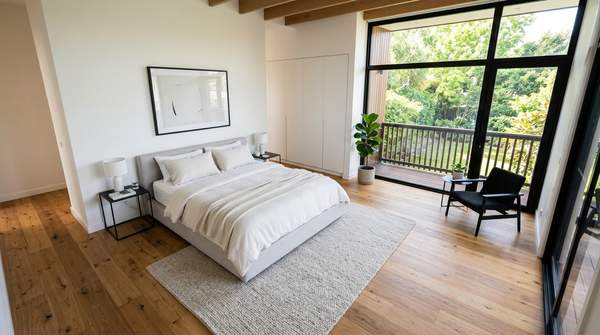
In a 12-square-meter apartment near the Eiffel Tower, Studio Pauline Borgia has fit a full kitchen, a hidden bed, and a walk-in shower. This innovative micro-apartment design in Paris responds to soaring real estate costs. Parisian real estate prices have soared over 30% in the last decade, according to Knight Frank Report 2023, making traditional spacious apartments unattainable for many.
The average size of a new apartment in central Paris has shrunk by 15% since 2015, according to the Paris City Planning Department. Parisian real estate demands increasingly smaller units to meet demand and price points, yet the human desire for comfort, ample storage, and personal space remains constant.
Micro-apartments will proliferate as a market necessity, but their long-term viability as primary residences for a broad demographic remains questionable. Designers must innovate further or risk resident dissatisfaction and high turnover. Studio Pauline Borgia, renowned for transforming tiny spaces into functional, aesthetic homes, according to Architectural Digest France Feature, exemplifies this push. Demand for compact, centrally located living in Paris has surged among young professionals and international students, according to Savills Market Analysis 2024.
The Rise of Parisian Micro-Apartment Design
- Micro-apartments in Paris typically range from 9 to 20 square meters, often featuring multi-functional furniture like murphy beds and convertible tables, according to Le Figaro Real Estate.
- These units are primarily marketed towards single occupants, students, or short-term renters seeking proximity to work or universities, according to Century 21 France Data.
- Common features include integrated storage solutions, compact kitchenettes, and efficient bathroom layouts to maximize every square inch, according to AD France Design Review.
These units, typically 9 to 20 square meters, cater to single occupants, students, or short-term renters prioritizing central location over expansive space. Their prevalence signals a market adapting to economic pressures, where efficient design becomes paramount for urban accessibility.
Studio Pauline Borgia's Approach to Small Spaces
Studio Pauline Borgia's 'Champs-Élysées Jewel,' a 15 sqm unit, features custom cabinetry concealing a dining table and home office, according to an Designboom Interview with P. Borgia. Their designs often use high-end materials like bespoke oak joinery, marble, and integrated smart home technology, as reported by Elle Decor France. Modular walls and sliding partitions, a signature element, reconfigure space for daily activities, seen in a Dezeen Project Showcase. Pauline Borgia aims 'not just to fit things in, but to create a feeling of generosity and calm, even in the smallest footprint,' according to the Studio Pauline Borgia Website. Studio Pauline Borgia proves that small spaces need not compromise style or functionality, pushing the boundaries of compact luxury.
Challenges of Designing Small Spaces in Paris
Studies suggest prolonged living in spaces under 20 square meters can increase stress and claustrophobia for some, according to the Journal of Environmental Psychology, 2022. Parisian regulations mandate a minimum 9 square meters for rental properties, a standard micro-units often meet, according to French Housing Law Article R.111-2. Critics argue micro-apartment proliferation, despite design, can exacerbate social isolation due to limited space for entertaining or retreat, states the Urban Studies Journal. Persistent high rental and sale prices for even 12 sqm units in prime Parisian locations reveal housing policies effectively price out spacious living, forcing a trade-off where location trumps fundamental human comfort. The aestheticization of micro-apartments, exemplified by Studio Pauline Borgia, risks normalizing a potentially detrimental living standard. This obscures the long-term psychological and practical compromises residents face. While innovative, widespread micro-apartment adoption raises critical questions about long-term urban planning, resident well-being, and equitable access to truly adequate housing.
Latest Trends in Micro-Apartment Living
Future micro-apartment designs will likely integrate advanced smart home technologies for climate, lighting, and security, according to TechCrunch Urban Living Report. A growing trend favors 'co-living' spaces, where private micro-units complement shared amenities like larger kitchens, lounges, and workspaces, according to WeLive Annual Report. Architects explore modular construction for flexible, adaptable micro-apartments that can reconfigure or expand, notes MIT Senseable City Lab Research. The future of urban living will see continued innovation in compact design, alongside a growing debate about minimum acceptable habitation standards and the role of shared spaces.
Your Questions About Micro-Apartments Answered
Do micro-apartments in Paris offer good investment returns?
Resale values for well-designed micro-apartments in prime Parisian locations have remained stable or increased, often outperforming larger, less central properties, according to the Notaires de Paris Index. The location premium appears to offset the size compromise for investors.
What are the main drawbacks of living in a micro-apartment?
Common tenant complaints include insufficient storage for personal belongings and a lack of dedicated space for hobbies or guests, according to a Tenant Rights Association Paris Survey. This suggests a fundamental tension between compact living and the need for personal sanctuary. Soundproofing also remains a critical consideration, as proximity to neighbors can amplify noise issues, according to the Building Standards Authority France.
Are micro-apartments typically furnished in Paris?
Many micro-apartments come fully furnished, reducing initial moving costs for residents, according to the Paris Rental Agency Guide. This, however, often limits personalization, as tenants may not bring their own furniture or decor. By the end of 2026, prospective tenants in Paris will likely weigh these practical limitations against the benefits of a prime location.