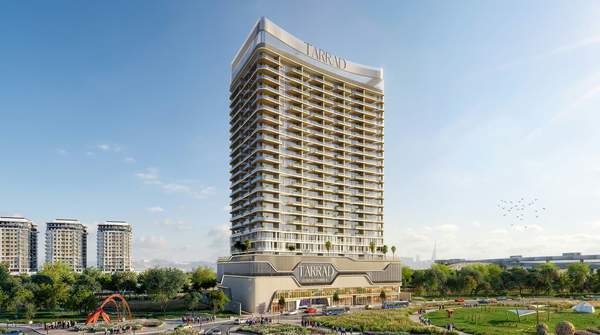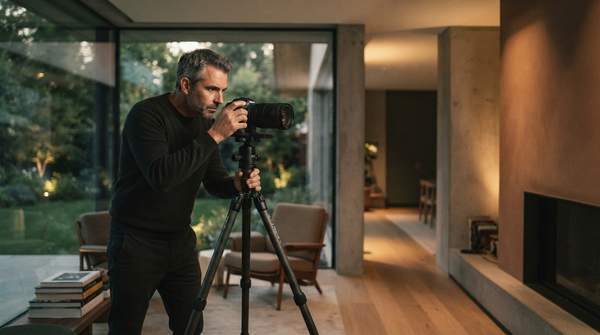
For a distinctive high-end home, professional architectural photography is a strategic investment rather than a routine listing expense. The choice between architectural and standard real estate photography comes down to intent: standard photography documents a property evidentially—every room, wide and evenly lit, corner to corner—while architectural photography interprets it, using light, composition, and perspective to convey design intent and evoke emotion. For a luxury property whose value lies in its design, the interpretive approach is usually the one that commands attention.
The Distinct Role of Photography in Luxury Real Estate
Luxury marketing begins with a simple truth: buyers of exceptional properties are not shopping for square footage. They are shopping for a feeling—a way of living. Photography is the first, and often only, element of a listing that can transmit that feeling before a buyer ever schedules a viewing. As photographer Karen K Photo explains, strong imagery allows potential buyers, tenants, and investors to imagine themselves in an environment, "which is exactly what you want when marketing a property."
That standard rises sharply at the top of the market. Guidance on luxury real estate photography from imagen-ai.com is blunt on this point: "Luxury buyers want perfection, and high-end agents expect your visual assets to reflect that." The same guide notes that luxury real estate photography can require managing dynamic ranges of up to 15 stops of light—far beyond point-and-shoot documentation. In other words, the visual assets for a high-end listing are held to a different technical and artistic bar than those for a typical home.
Architectural Photography vs. Standard Real Estate Photography: A Core Distinction
Architectural photographer Serhii Chrucky draws the boundary in terms of purpose and lifespan. Real estate photography, he explains, "sells a property. It's essentially evidentiary. The job is to show what's there: every room, wide and evenly lit, corner to corner, nothing hidden." Real estate photographers typically use wide-angle lenses to capture as much of the property as possible in a single shot, with editing to enhance brightness, contrast, and color—clear and appealing representation meant to entice a viewing.
Architectural photography takes the same built environment as its subject but turns its lens toward design and unique features. Photographer Allen Mowery describes commercial architectural photography as "focused on capturing the design and unique features of a building or specific space." Where one style answers the question "what does this property contain?", the other answers "why was this space designed this way, and what does it feel like to stand inside it?" Chrucky's framing is useful for sellers: a figure in a frame reads "as evidence of how the space actually works"—an intentional narrative choice, not a documentary obligation.
Techniques That Elevate Perceived Value in Luxury Properties
Three craft choices do most of the interpretive work. The first is light. Professional architectural photographers, as Karen K Photo describes, use natural light "to bring out rich textures" while strategic artificial lighting adds warmth and depth—a matter of atmosphere, not just exposure accuracy.
The second is composition and framing. Chad Byerly Photography highlights minimalist compositions that focus on "clean lines and simplicity to highlight architectural intent," along with twilight and night photography that emphasizes "ambiance and illumination." A well-composed frame privileges the most important architectural detail rather than maximizing room coverage.
The third is perspective and precision. Imagen-ai's guidance points to the specific challenges of the genre—converging vertical lines, extreme window glare—and the need for absolute geometric precision and pristine image quality to command premium presentation. Together, these choices convert a listing image from a record of a space into what Byerly calls "a bridge between design and its audience, a tool for recognition, a means of attraction."
Decision Framework: Choosing Your Photography Investment
The practical question for a seller or agent is not "which photography is better?" but "which does this listing need?" Jordan Powers, a photographer who charges roughly ten times standard real estate rates, notes that "an experienced or sophisticated Realtor/Broker will already know when they need something more than just standard real estate photography." Evaluate your property against the criteria below to reach that same judgment deliberately.
| Criterion | Architectural Photography | Standard Real Estate Photography |
|---|---|---|
| Primary objective | Showcase design intent and unique features; interpret the space | Clear, appealing representation that entices a viewing |
| Visual style | Intentional lighting, minimalist framing, twilight ambiance, geometric precision | Wide-angle coverage, even light, brightness and color enhancement |
| Buyer expectation | Luxury buyers and high-end agents who want perfection and a visual narrative | A broad audience that needs to see what is there |
| Strategic fit | Listings whose value lies in design, materials, and story | Listings where completeness and clarity drive the decision |
Reading the matrix as a decision: if your property's answers cluster in the left column—a signature architect, a distinctive design language, a target buyer who buys on emotion and narrative—architectural photography is the strategic investment. If the listing's job is mainly to show buyers what exists, standard real estate photography fulfills that purpose, and the premium for the interpretive approach buys little. Powers's own framing reinforces the boundary: he is "only brought in when a property listing needs what I am uniquely able to provide."
Making the Strategic Choice for Your Luxury Listing
For luxury properties with distinctive architectural features and a marketing strategy focused on storytelling and emotional connection, investing in professional architectural photography is a strategic decision that enhances perceived value and appeal—provided the property's distinctiveness and the target audience's expectations align with an interpretive visual approach. The choice is not about cost but fit: documentary completeness for a conventional listing, interpretive craft for a designed one.
How do you know the investment performed? Watch the listing's measurable indicators: increased engagement with the property listing, higher-quality inquiries, and positive feedback on the visual presentation from discerning buyers and agents. Those responses are the observable evidence that the imagery did what architectural photography is built to do—turn a property's design into a story a buyer wants to join.
Sources
- How Architectural Photography Can Elevate Real Estate Marketing — Karen K Photo Headshots, Branding, Commercial Photography
- IMAGEN AI
- What Is Architectural Photography, and Who Is It For? — Serhii Chrucky Architectural Photographer
- The Power of Professional Architectural Photography: Benefits and ROI — Allen Mowery
- The Power of Architectural Photography: Showcasing Design Excellence — Architectural Photographer Orlando FL - Chad Byerly Photography
- High-End Real Estate Photography — JORDAN POWERS PHOTOGRAPHY