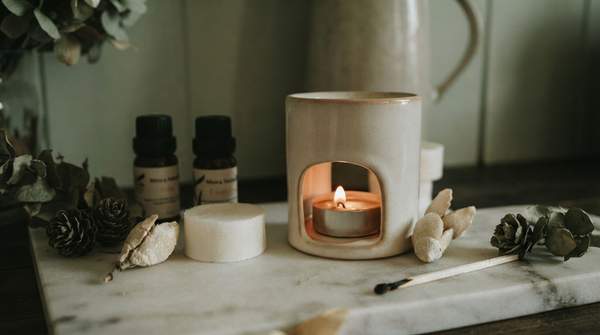
No single home fragrance format wins outright, and any guide that claims otherwise is selling something. The honest verdict, drawn from how these products actually work, is simpler: scented candles own the flame-lit evening, delivering warmth, light, and scent together; reed diffusers own the unattended hours, releasing fragrance continuously without combustion; and incense owns speed and ritual, scenting a room within minutes of lighting. This comparison covers the three most common artisanal formats—candles, diffusers, and incense—and the oils that scent them, setting aside potpourri, room sprays, and wax melts.
What Defines an Artisanal Home Fragrance?
"Artisanal" carries no strict legal definition in this trade, so the word has to be earned rather than certified. The clearest description comes from the perfumer Dr. Nadeem Crowe, writing for Rook Perfumes, who describes artisanal fragrances as "created by individual perfumers using small batches and high-grade ingredients, often with sustainable sourcing practices." His markers of a serious house—transparent sourcing, small batch sizes, formulations that evolve over time, and eco-friendly packaging—translate neatly from perfume to the home.
Commentary on the artisan perfume sector adds the essential constraint: quantity is limited because the products are not mass-produced, and the best of them feel personal, carrying what one writer calls "a piece of the creator." A curated directory of home fragrance makers selects its brands for the standard of their work, the care taken in formulation, and a clear sense of purpose behind what they produce. Artisanal perfumers also frequently work with carefully sourced natural materials valued for their depth and for the way they evolve—qualities small-batch candle and diffuser makers pursue as well.
Candles, Diffusers, and Incense: An Overview
The three formats differ at the most basic level: what has to happen for the scent to reach you. A scented candle, as a luxury linens retailer's buyer's guide puts it, creates a warm glow and offers warmth and light alongside its aroma, building a cosy atmosphere that no flameless format can fully imitate. The candle is the only choice of the three that is also a lighting decision, which is precisely why it dominates shared living spaces after dark.
A room diffuser is a quieter machine: reed sticks sitting in a fragranced oil and alcohol solution, drawing scent upward and off the sticks. It operates without a flame, without smoke, and without attention—a fragrance that works while you are elsewhere. Incense works by burning sticks or cones, releasing its scent quickly and visibly. As one fragrance retailer's comparison notes, incense carries a ritual dimension that no other format holds, which is why it remains the default for prayer and meditation spaces. Each mechanism, in other words, implies a different rhythm of use.