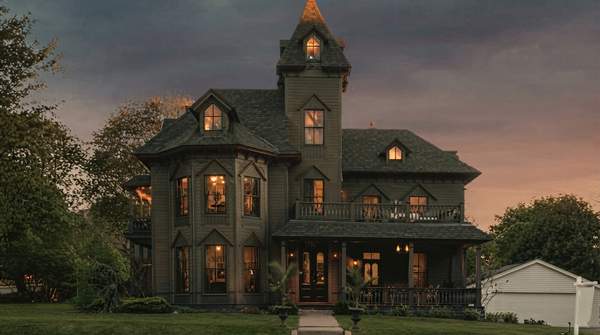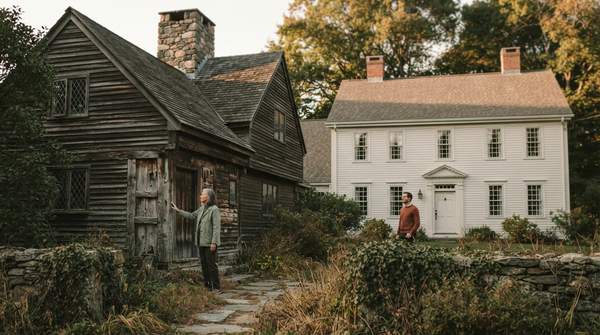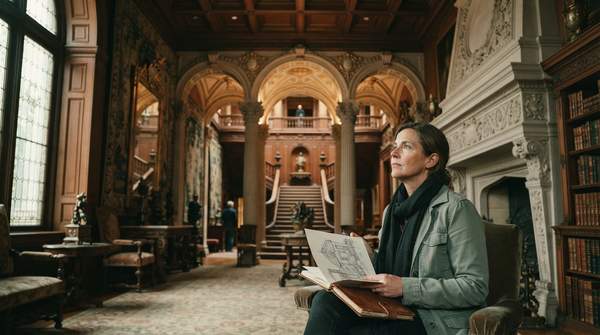
Gilded Age architecture announced new money in two distinct visual languages. The dominant one, Beaux-Arts, was a formal, classical style—symmetrical, monumental, and ornamentally lavish—that originated in 19th-century France before rising to prominence in American metropolitan areas such as New York City and San Francisco. The other was a broader, harder-to-codify eclecticism in which architects and their clients blended features from wildly different historical traditions into single designs. Learning to tell these two approaches apart is the key to understanding what any Gilded Age mansion was built to say about its owner.
Introduction: The Era of Architectural Grandeur
The Gilded Age produced some of the most sumptuous spectacles in American building history, and the style that most reliably evokes them today is Beaux-Arts. As a primer by Nicole Kliest in Vogue describes it, Beaux-Arts is “a fantasia of classicism and grandeur,” combining the symmetry and proportions of ancient Roman and Greek architecture with the elaborate ornamentation of the French and Italian Renaissance and Baroque. It is a style built to be read as permanent, cultivated, and expensive.
Yet Beaux-Arts was only one strand of the era's ambition. Writing in the Hayes Historical Journal, the historical analysis of the period's “architectural psychology” characterizes the broader mood as eclectic and complex, borrowing freely from many historical sources. The same wealthy clients who commissioned classical palaces also commissioned houses that mixed medieval, colonial, and Eastern references without hesitation. Both approaches shared a single purpose: making a private fortune visibly undeniable.
Social Motivations Behind Opulent Design
Gilded Age architecture was, above all, a social instrument. Grand scale, elaborate ornamentation, and historical reference functioned as evidence of wealth and status—arguments in stone addressed to the owner's peers. The Hayes Historical Journal analysis notes that taste-makers of the period, including Edith Wharton, would later help set the terms of early 20th-century regret over these “aesthetic pretensions,” which were remembered collectively as a kind of “Reign of Terror” in American architectural history. That later embarrassment is itself revealing: the buildings had succeeded so completely as displays that their excess became the era's defining memory.
Clients were not passive patrons waiting on professional judgment. Mark Twain's doggerel poem about his own new home, quoted in the same journal analysis, celebrates “the bricks of various hue / And shape and position, straight and askew”—bragging about irregularity rather than refinement. The journal's account concludes bluntly that clients “could dispense with reliance on architectural expertise if they were so inclined,” and that “the vast majority were so inclined.” Owner taste, not architectural doctrine, was frequently the organizing force behind these houses.