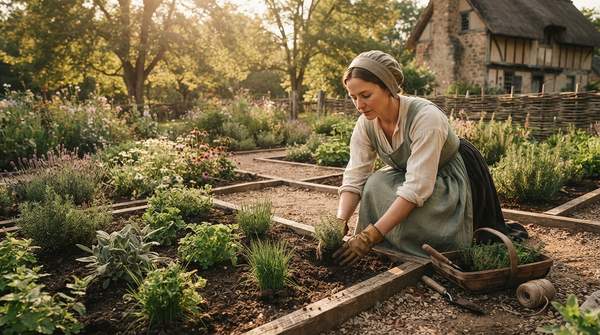
Your backyard garden can become a perpetual food machine, catching and storing the sun's energy to feed your family year-round with minimal intervention. This approach, centered on permaculture design for homeowners, transforms traditional gardening into a self-sustaining system. It offers a profound way to harness natural energy for personal benefit, providing consistent yields and reducing external inputs.
Many homeowners believe gardening for self-sufficiency is labor-intensive, requiring constant tending and frequent replanting. However, permaculture principles enable high yields with significantly reduced ongoing effort, challenging conventional notions of garden management. This method shifts the focus from repetitive tasks to intelligent, upfront design.
Homeowners adopting permaculture are likely to achieve greater food security and ecological resilience, transforming their relationship with their landscape from consumer to co-creator. This design philosophy promises a future where gardens work with nature, not against it, to produce abundant food with less human intervention.
What is Permaculture Design?
Permaculture is defined as consciously designed landscapes that mimic natural patterns and relationships, yielding an abundance of food, fiber, and energy for local needs, according to green-connect. More than just planting, it's a design philosophy transforming a garden into a self-regulating, productive system. It integrates elements so each supports the others, fostering long-term stability.
This method focuses on creating efficient, resilient home food systems by observing and interacting with existing natural processes. It involves careful placement of plants, water features, and structures to maximize resource use and minimize waste. The goal is to build a garden that requires less human input over time, allowing natural cycles to drive its productivity.
Beyond the Row: The Power of Polycultures and Guilds
A well-planned polyculture will yield year-round, providing food, seeds, and compost crops for people, wildlife, and microorganisms alike, states freepermaculture. Unlike monocultures, which focus on single crops, polycultures involve growing multiple species together. This diversity makes them less susceptible to disease and insect infestation, leading to more consistent and reliable yields.
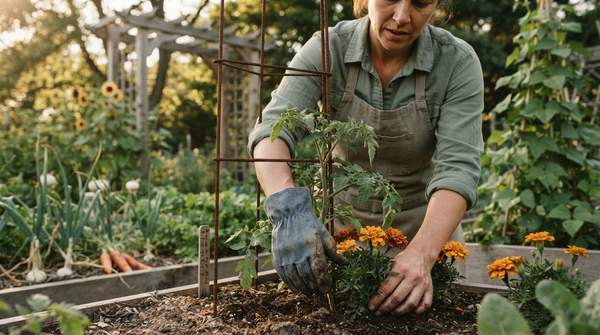
When several guilds are planted together, the result is a multifunctional, polycultural garden that thrives in low-maintenance perpetuity, according to freepermaculture. A guild is a group of plants supporting each other through nitrogen fixation, pest deterrence, or nutrient accumulation. Together, these diverse layers create a self-sufficient ecosystem, reducing the need for external fertilizers or pesticides and ensuring continuous abundance.
Designing for Resilience: Mimicking Nature's Blueprint
Permaculture design principles guide homeowners to create robust systems that reduce the need for external inputs. By observing how natural ecosystems function, designers can integrate similar strategies into their home gardens. This includes designing for water retention, creating microclimates, and fostering beneficial insect populations.
Understanding natural ecosystems allows homeowners to design gardens that are inherently stable and require minimal human intervention. For instance, planting trees to provide shade for understory crops or using groundcovers to suppress weeds mimics forest structures. This conscious design reduces reliance on irrigation, chemical treatments, and constant weeding, allowing the garden to self-regulate and thrive.
Why Every Homeowner Should Consider Permaculture
Obtaining a yield can be as simple as using organic gardening techniques to provide food for our families, according to Earth Fm. Permaculture elevates this, offering a framework for systems that are not just productive, but self-sustaining and resilient. It transforms the garden from a seasonal chore into a year-round engine, continuously capturing and storing solar energy.
Homeowners who embrace permaculture aren't just growing food; they're investing in a self-optimizing, biological asset that, according to freepermaculture, "thrives in low-maintenance perpetuity." This fundamentally alters the traditional cost-benefit analysis of gardening, making the goal of feeding your family from your own backyard achievable and straightforward, even for beginners. The "consciously designed landscapes that mimic natural patterns" described by green-connect, when combined with the year-round yields of polycultures, suggest that permaculture offers a path to genuine food security and resource independence that conventional gardening cannot match.
Common Questions About Starting Your Permaculture Garden
What are the basic principles of permaculture design?
Permaculture design operates on a set of core principles, including "Observe and Interact" and "Produce No Waste," among others. These principles encourage careful planning and thoughtful placement of elements to create efficient systems. For example, applying the principle of "Use and Value Renewable Resources and Services" might involve installing a rainwater harvesting system for irrigation.
How can I start a permaculture garden at home?
Starting a permaculture garden at home often begins with observing your site's unique conditions, like sun exposure and water flow, before planting. Begin with small, manageable zones, focusing on areas you interact with most frequently. Consider starting with a simple herb spiral or a small food forest guild, rather than attempting to redesign the entire property at once.
What are the benefits of a self-sustaining garden?
A self-sustaining garden offers numerous benefits beyond food production, including improved soil health and reduced water consumption. These gardens foster local biodiversity, attracting beneficial insects and wildlife, which contributes to overall environmental health. This approach also minimizes the need for external inputs like fertilizers or pesticides, saving resources and money over time.
Your Path to a Self-Sustaining Home
By 2026, many homeowners will likely recognize the long-term value of permaculture design, moving towards self-sustaining gardens that offer both food security and ecological benefits, transforming backyards into thriving, low-maintenance ecosystems as more individuals seek efficient and environmentally sound methods for home food production.