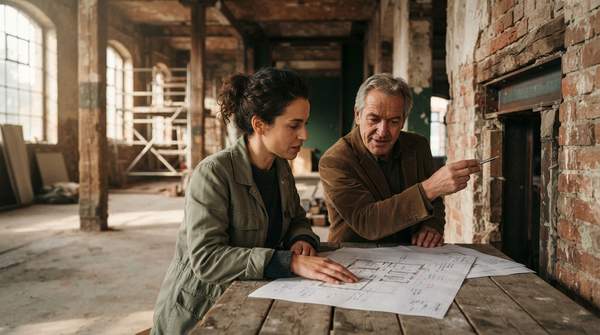
Adaptive reuse—the practice of transforming an old structure into a new, functional space while preserving its original character—succeeds or fails on far more than aesthetics. A systematic review published in the journal npj Heritage Science, led by researchers Qi Zhang, Zuraini Md Ali and Nurdiyana Zainal Abidin, frames the outcome as a "dynamic synthesis of the interdependencies between factors," spanning architectural, economic, social, cultural, environmental, policy and technical concerns. Understanding those categories is what separates a viable transformation from a stalled one.
What is Adaptive Reuse?
Adaptive reuse gives communities a way to breathe new life into old, abandoned or underused structures by converting them into needed spaces—housing, community centers, mixed-use venues. The U.S. Environmental Protection Agency describes it plainly: redesigning existing buildings to serve new functions "helps preserve the historical and social fabric of the place, while creating new opportunities." An Australian government booklet on the practice places it in the same family as recycling itself—reduce, reuse, recycle—extended to the buildings we inherit rather than demolish.
What distinguishes adaptive reuse from ordinary renovation is intent. The designer is not merely updating a building; they are negotiating between what the structure was and what the community now needs. A 2022 industry overview by building materials manufacturer Sto Corp. notes that adaptive reuse projects can cost roughly 16 percent less and take about 18 percent less time than comparable new construction, while also improving a building's performance and resale value. The craft lies in deciding what to keep, what to upgrade, and how to shape spaces that remain useful far into the future.